
Frequently Asked Questions
Will we be outside all year long, even in winter months?
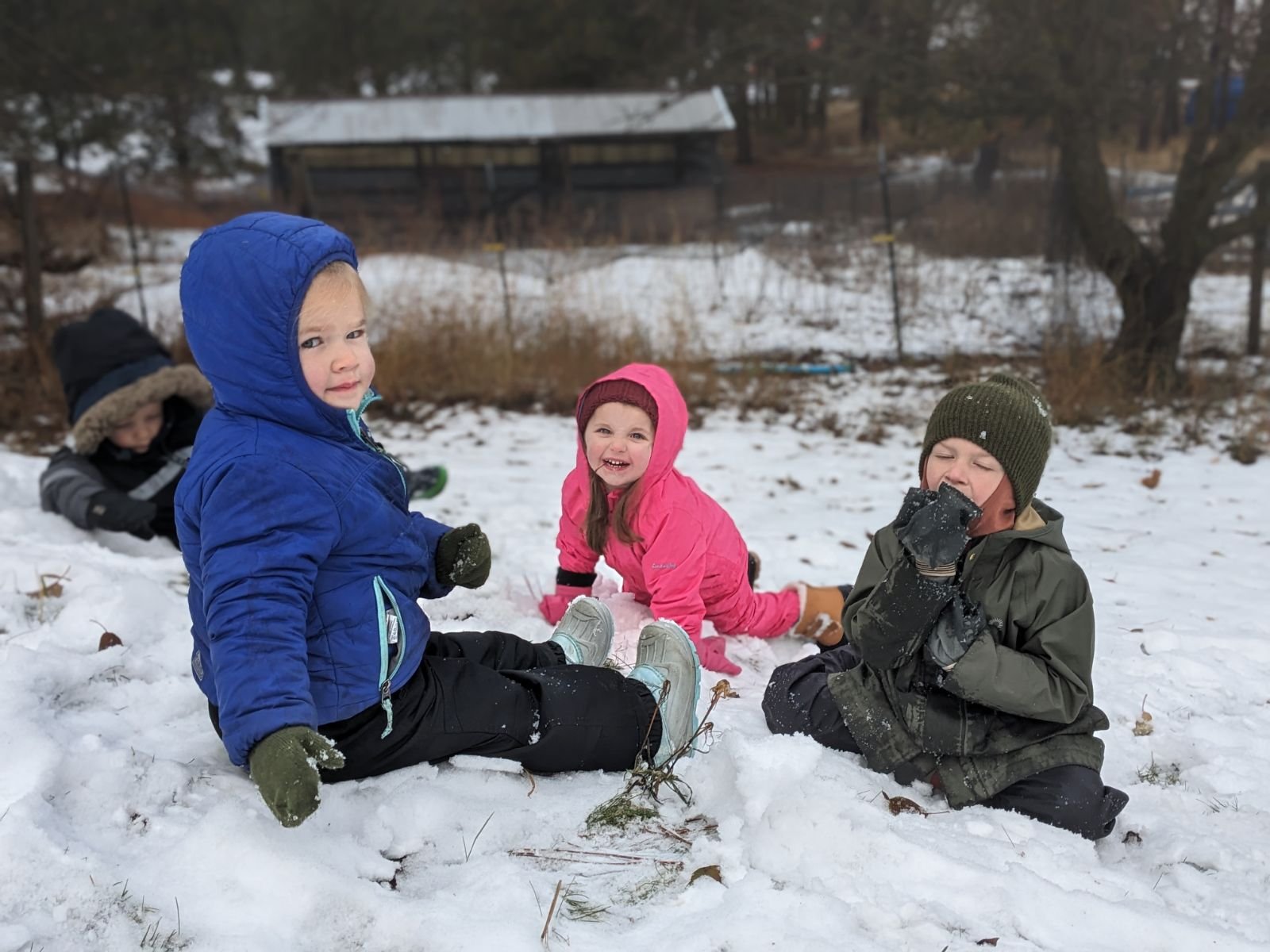
Yes! One of our school's favorite mottos is, "There's no such thing as bad weather, only bad clothing." We believe children thrive outdoors in every season, and with the right gear they can safely and comfortably enjoy all that nature has to offer.
Our comprehensive recommended gear list is designed to ensure our learners stay warm, dry, and comfortable—even on the coldest days. As children explore, play, and move their bodies, they naturally generate warmth, while proper insulating layers help retain that heat. We also build campfires on cold days as a way to warm up!
Will there be snow days?
Stillwater Field School follows the Spokane Public Schools calendar for holidays, scheduled breaks, and snow days whenever possible.
While our students are equipped to enjoy nature in a wide range of weather conditions, safety is always our highest priority. On rare occasions, we may cancel class due to a combination of dangerously cold temperatures, heavy precipitation, high winds, or other severe weather conditions.
If class is canceled due to weather, families will be notified as soon as possible.
Will snacks be provided?
YES! Healthy snacks are included. Don’t worry, if your learner has any allergies, we’ll be sure to steer clear of those foods.
How much does it cost to sign up?
There is a $150 deposit to register, which is used as a supply fee. June tuition is also due upon registration.
Preschool:
2-Day Cohort: $350/month
4-Day Cohort: $650/month
Homeschool Program:
1-Day Program: $165/month
2-Day Program: $300/month
*There is a 10% sibling discount for all homeschool families
Does my child need to be potty trained?
Yes, we do require all of our little learners to be potty trained. During the winter months, changing pull-ups outdoors requires removing multiple layers of clothing, which can expose children to unsafe cold temperatures. For this reason, all preschool students must be potty trained before attending.
Our instructors are happy to assist preschool-aged children with bathroom routines, such as helping with clothing fasteners or providing guidance as needed. However, students in our Homeschool Enrichment Program are expected to use the restroom independently without assistance.
We do have pit toilets at school. However, we spend much of our time exploring the farm and going on nature walks so there will be occasions when we are far from our facilities. In those situations, students are respectfully taught how to use the restroom outdoors in a safe, hygienic, and Leave No Trace manner.
What curriculum will be used?
We utilize Exploring Nature with Children, a Charlotte Mason-inspired curriculum. It is our goal to ensure learning is fun, interactive, and engaging for all students. We believe in the importance of preparing young learners for Kindergarten and First Grade. Students will focus their learning around the changing seasons with weekly poems, art, themed books, nature walks, and basics such as numbers/letters/shapes/colors and more!
Who was Charlotte Mason?
Charlotte Mason (1842–1923) was a British educator whose philosophy has inspired schools and homeschooling families around the world for more than a century. She believed that children are whole people deserving of respect, capable of meaningful ideas, and naturally curious about the world around them.
Rather than relying primarily on worksheets, rote memorization, or busy work, Charlotte Mason emphasized learning through firsthand experiences, time spent in nature, beautiful literature ("living books"), art, music, narration, habit formation, and meaningful relationships.
At Stillwater Field School, Charlotte Mason's philosophy shapes the way we approach learning. You can expect to see children:
Spending ample time outdoors exploring and caring for the natural world.
Learning through hands-on experiences, observation, and discovery.
Reading rich, engaging books that spark curiosity and imagination.
Developing habits such as kindness, responsibility, attentiveness, and perseverance.
Creating artwork, singing, and appreciating beauty in everyday life.
Having plenty of time for imaginative play and unhurried exploration.
Charlotte Mason's approach to education was remarkably countercultural during a time when education often emphasized conformity, memorization, and preparing children for factory life during the Industrial Revolution. Instead, she viewed each child as a unique person with innate curiosity and tremendous potential. She believed that children learn best through meaningful experiences, rich ideas, and regular time spent in the natural world rather than through rigid, standardized instruction.
Charlotte Mason also believed that spending time in creation helps children develop a sense of wonder, gratitude, and stewardship for the world God has made. At Stillwater Field School, our goal is to nurture not only academic growth, but also character, curiosity, and a lifelong love of learning.
While many educational approaches focus primarily on what children know, Charlotte Mason encourages us to also consider who they are becoming.